FUTURE OWNED / RESEARCH THREAD 01
FROM LABOUR TO OWNERSHIP
RESEARCH QUESTION
If AI and automation reduce the economic value of human labour, does ownership become more important than employment as a route to income, security and agency?
AI may transform work rather than simply eliminate it. If technology creates greater productivity and value, who owns the assets generating that value, and how do ordinary people participate in it?
MACHINES → CAPITAL
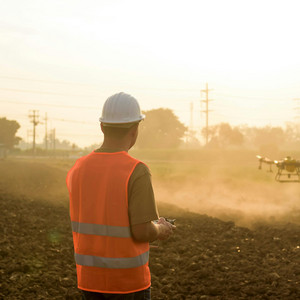
Who owns the machines?
Follow the physical tools of production, as well as the rights and institutions around them.
WHAT HAPPENS TO WORK? → MEDIA → CONNECTED EVIDENCE
Explore the work branch ↗MEDIA / ORIGINAL PUBLISHERS
Different voices. An open question.
3 sourced episodes. Explore different perspectives, then choose a player. No autoplay.
 18:35
18:35 Podcast / video
 16:12
16:12Swipe to browse · Tap an episode to open its player
QUESTION → SIX LINES OF ENQUIRY
Follow the evidence, not a predetermined answer.
Open a branch to explore its questions. These are research directions, not findings.
01WHAT HAPPENS TO WORK?
Which parts of work are being automated, augmented or made more valuable?
TOPICS TO EXAMINE
- AI exposure
- automation
- job displacement
- job creation
- task transformation
- wages
- working hours
- job security
- bargaining power
- skills
- human judgement
- new occupations
FOLLOW-UP QUESTIONS / DIMENSIONS
- Which occupations are most exposed?
- Are jobs disappearing or are tasks within jobs changing?
- Which sectors are creating new work?
- What happens to wages?
- Does productivity growth reach workers?
- Does working time fall?
- Which human capabilities remain valuable?
OPEN ENQUIRY · Evidence review pending
View the evidence register ↗02WHAT DO PEOPLE OWN NOW?
What productive or appreciating assets do ordinary households actually own today?
TOPICS TO EXAMINE
- homes
- pensions
- savings
- shares
- investment funds
- business equity
- land
- intellectual property
- digital assets
FOLLOW-UP QUESTIONS / DIMENSIONS
- home ownership
- workplace pensions
- household wealth
- direct share ownership
- age differences
- wealth inequality
OPEN ENQUIRY · Evidence review pending
View the evidence register ↗03WHO OWNS THE MACHINES?
When AI or automation produces more economic value, who owns the assets generating that value?
TOPICS TO EXAMINE
- AI companies
- models
- intellectual property
- compute
- semiconductors
- data centres
- energy infrastructure
- robotics
- digital platforms
- datasets
- networks
FOLLOW-UP QUESTIONS / DIMENSIONS
- Who participates through workers?
- Who participates through founders?
- Who participates through public shareholders?
- Who participates through institutional investors?
- Who participates through pension funds?
- Who participates through governments?
- Who participates through private capital?
- Who participates through overseas investors?
OPEN ENQUIRY · Evidence review pending
View the evidence register ↗04HOW DO ORDINARY PEOPLE BECOME OWNERS?
What mechanisms currently allow ordinary people to own productive capital?
TOPICS TO EXAMINE
- pensions
- ISAs / investment accounts
- public markets
- employee share schemes
- entrepreneurship
- employee ownership
- cooperatives
- property
- collective investment
- community ownership
FOLLOW-UP QUESTIONS / DIMENSIONS
- Do people think of themselves as owners when they hold productive assets through a pension?
- How do direct and indirect ownership differ?
OPEN ENQUIRY · Evidence review pending
View the evidence register ↗05WHAT HAPPENS IF LABOUR CAPTURES LESS VALUE?
What happens if productivity rises but labour receives a smaller share of the economic gain?
TOPICS TO EXAMINE
- labour income
- capital income
- inequality
- wealth concentration
- intergenerational differences
- bargaining power
- economic security
- taxation
- social mobility
OPEN ENQUIRY · Evidence review pending
View the evidence register ↗06WHAT COULD BROADEN OWNERSHIP?
Which ownership structures could genuinely widen participation in productive assets?
TOPICS TO EXAMINE
- employee equity
- worker ownership
- cooperatives
- citizen investment funds
- public wealth funds
- community ownership
- fractional ownership
- tokenisation
- real-world assets
- pension reform
- digital ownership
- intellectual-property participation
FOLLOW-UP QUESTIONS / DIMENSIONS
- access
- liquidity
- regulation
- risk
- governance
- investor protection
- concentration
- minimum capital requirements
OPEN ENQUIRY · Evidence review pending
View the evidence register ↗LABOUR → MACHINES
Work may change. Who captures the value?
A change in how work is done raises another question: how are productivity gains shared?
SOURCE CONTEXT / EXPOSURE IS NOT JOB LOSS
1 in 4One in four workers globally is in an occupation with some generative-AI exposure. Exposure measures potential task transformation, not predicted job losses or a finding about the distribution of ownership.
This measures potential exposure. It does not predict one in four jobs disappearing, or establish who captures future value.
ILO · Working Paper 140 · 20 May 2025 ↗EVIDENCE
What can we substantiate?
WORKING EVIDENCE / institutional report
Generative AI and Jobs: A Refined Global Index of Occupational Exposure
One in four workers globally is in an occupation with some generative-AI exposure. Exposure measures potential task transformation, not predicted job losses or a finding about the distribution of ownership.
International Labour Organization ·
Related branch ↗ · Original source ↗INFRASTRUCTURE
The intelligence may be digital. The infrastructure is physical.
Computing depends on physical systems. Ownership, access and control remain tangible questions.
OPEN QUESTIONS
Questions we don't yet know the answer to
- OPEN QUESTIONIf most workers have pensions, are they already capital owners without thinking of themselves that way?
- OPEN QUESTIONIf AI increases company productivity, who captures the gain?
- OPEN QUESTIONCan ownership realistically supplement declining labour income at scale?
- OPEN QUESTIONHow much productive capital would an ordinary household need for investment income to materially improve security?
- OPEN QUESTIONDoes widening access to investment reduce inequality, or primarily benefit people who already have spare capital?
- OPEN QUESTIONCould younger people work less while simultaneously owning less?
- OPEN QUESTIONWhich assets become most economically important in an AI-heavy economy?
- OPEN QUESTIONShould ownership of AI infrastructure become a broader public policy question?
These questions test the premise. They do not assume that labour will capture less value, or that wider investment access will automatically improve security.
ENERGY → CAPACITY
AI does not run on nothing.
Follow the energy, land and infrastructure behind computation. These are further lines of enquiry, not conclusions.
WHAT CHANGED?
A record of how the investigation develops.
No reviewed developments recorded yet. This timeline will track dated evidence, its source, why it matters and the branch it changes.
CONNECTED SIGNALS
Developments at the edges of this question.
These existing Signals concern financial infrastructure and potential routes to participation. They do not establish that labour income is declining, or that tokenisation broadens ownership.
CURRENT · Money / Ownership / Tokenisation / Regulation
UK Fund Tokenisation Moves Into Regulatory Guidance ↗
The FCA has issued guidance on using distributed-ledger technology within the existing framework for authorised funds, including fund registers.
Original source ↗CURRENT · Markets / Regulation / Infrastructure
UK Regulators Shift From Tokenisation Experiments Toward Adoption ↗
The FCA’s wholesale-market feedback statement identifies post-trade processes and collateral movement as priorities and proposes a joint roadmap with the Bank of England.
Original source ↗OPEN QUESTION
What happens when productivity needs fewer people?
When fewer tasks require human labour, what changes for income, participation and ownership?
CONNECTED DISPATCHES / INTERPRETATION IN DEVELOPMENT
Where the argument may develop.
DRAFT / IN DEVELOPMENT
Who owns the machines? ↗
Investigating control of productive assets as automation changes where economic value is created.
DRAFT / IN DEVELOPMENT
When labour is no longer the main source of economic power ↗
A proposed enquiry into income, participation and bargaining power.
DRAFT / IN DEVELOPMENT
Property as a test case for digital ownership ↗
What a real asset can reveal about rights, records and control.
DRAFT / IN DEVELOPMENT
Tokenisation is not ownership ↗
Start with the rights a token represents, not the technology used to record it.
DRAFT / IN DEVELOPMENT
Can ordinary people own productive AI-era assets? ↗
Questions about access, control and meaningful economic participation.
DRAFT / IN DEVELOPMENT
The future of ownership versus the future of employment ↗
Two connected questions that may need different answers.
RELATED RESEARCH